Zero-Click Search is Here: Optimizing Your B2B SaaS for AI Answer Engines
Zero-Click Search is Here: Optimizing Your B2B SaaS for AI Answer Engines
Take a look at your organic search dashboard. If your impressions are climbing or holding steady while your organic click-through rates (CTR) and blog traffic are steadily declining, your website is not necessarily broken.
The search landscape has fundamentally shifted.
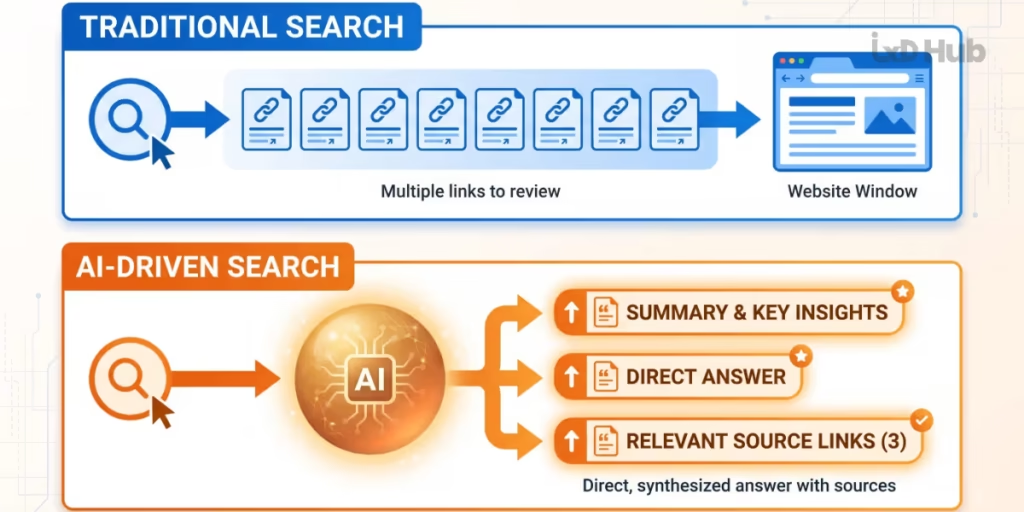
Google’s AI Overviews, Perplexity, and ChatGPT Search are answering complex buyer queries directly on the search results page. Buyers no longer need to click through ten blue links to compare software architectures, evaluate API rate limits, or understand compliance requirements. They get their answers instantly, synthesized by large language models (LLMs).
For growth leaders and founders, the old playbook of publishing high-volume, top-of-funnel glossaries is dead. It is time to Move Beyond Buzz. Surviving and scaling in this environment requires zero-click search optimization—the strategic discipline of structuring your digital presence so AI engines digest, cite, and recommend your product directly inside synthesized answers.
Winning in search is no longer about hoarding pageviews. It is about transforming your organic strategy into a high-intent pipeline engine that captures qualified buyers right at the point of synthesis, driving real growth instead of empty metrics.
What Is the Zero-Click Reality in Modern Search?
A zero-click search occurs when a user submits a query and gets their complete answer directly on the results page without clicking an external website link.
In enterprise and B2B software, zero-click searches used to be limited to basic queries like currency conversions, stock tickers, or simple definitions. Today, AI answer engines generate nuanced technical comparisons, synthesize software reviews, and outline implementation roadmaps directly in the search feed.
When an engineering lead asks an AI engine, “What are the tradeoffs between building an internal event pipeline versus buying an enterprise message broker?”, the engine provides a comprehensive, multi-paragraph breakdown. If your content merely repeats general industry knowledge, the AI will absorb your ideas without ever sending a visitor to your domain.
To maintain organic pipeline, marketing teams must shift their objective: you are no longer writing to attract casual readers; you are engineering content to become the primary verified source that AI models reference.
Why B2B SaaS SEO in 2026 Prioritizes Pipeline Over Traffic
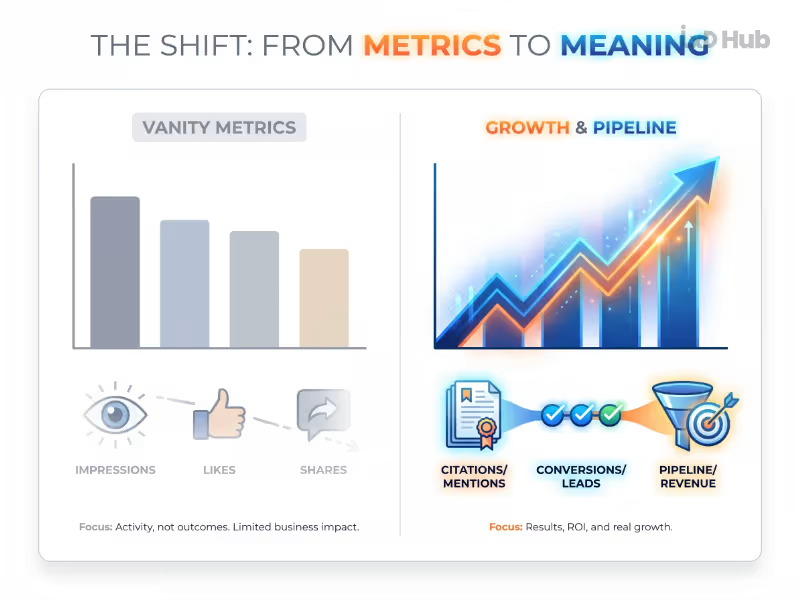
For years, marketing teams treated organic traffic as the primary indicator of SEO health. Marketing dashboards celebrated 50,000 monthly blog visits, even if 90% of those visitors were reading generic informational guides and never converted into paying accounts.
AI search models have eliminated the illusion of top-of-funnel vanity traffic.
┌────────────────────────────────────────────────────────────────────────┐
│                        THE METRIC REALIGNMENT                          │
├──────────────────────────────────┬─────────────────────────────────────┤
│ Legacy Organic Metrics (Outdated)│ Modern AEO Metrics (Revenue-Aligned)│
├──────────────────────────────────┼─────────────────────────────────────┤
│ • Total Organic Sessions         │ • Share of Model Voice (Brand AI %) │
│ • Top-of-Funnel Keyword Rankings │ • High-Intent Direct Referral Clicks│
│ • Raw Blog Impressions           │ • Brand-Assisted Inbound Pipeline   │
│ • Generic Backlink Counts        │ • Source Entity Citations in LLMs   │
└──────────────────────────────────┴─────────────────────────────────────┘
When building an organic growth strategy for B2B SaaS SEO in 2026, the core objective must pivot from chasing raw volume to establishing pipeline over traffic.
When an AI engine summarizes a category, it selectively links to three or four primary sources that provide unique data, proprietary frameworks, or direct technical answers. Securing one of those three citation links from an in-market buyer generates significantly higher conversion value—driving clicks that convert—than thousands of low-intent visits on a basic definition article.
How AI Answer Engines Parse Content Differently Than Traditional Google Crawlers
To optimize your content for machine synthesis, you must understand how AI answer engines evaluate web pages compared to traditional web crawlers.
┌────────────────────────────────────────────────────────────────────────┐
│                        HOW SEARCH CRAWLERS EVOLVED                     │
├──────────────────────────────────┬─────────────────────────────────────┤
│ Traditional Web Crawlers (Google)│ Modern LLM Search Engines (Perplexity)│
├──────────────────────────────────┼─────────────────────────────────────┤
│ • Parses raw HTML & keyword tags │ • Breaks content into semantic chunks│
│ • Counts raw inbound backlinks   │ • Evaluates "Information Gain" score│
│ • Matches exact query strings    │ • Checks cross-web entity consensus │
│ • Rewards high total word counts │ • Extracts standalone capsule blocks│
└──────────────────────────────────┴─────────────────────────────────────┘
Traditional search crawlers index web pages by scanning HTML code, mapping internal link structures, and calculating page authority based primarily on backlink profiles and keyword placements.
AI-powered search engines operate through a multi-stage semantic extraction process:
Semantic Chunking: The engine breaks long-form articles into modular, topical blocks rather than evaluating the page as a single unbroken text wall.
Entity Recognition & Authority Mapping: The model identifies core business entities (technologies, brands, methodologies) and determines whether your domain has established topical authority on those specific concepts.
Information Gain Scoring: LLMs assess whether your content contains new, non-derivative data—such as proprietary platform benchmarks, original code architectures, or firsthand case studies—or if it merely restates what already exists in its baseline training weights.
Passage Synthesis: The engine selects high-density summary passages from authoritative sources and combines them into an interactive response for the user.
Understanding this technical layer is essential for modern growth. To explore how search engines are layering AI synthesis over traditional indexing, read our strategic breakdown on SEO, GEO, AIO, AEO & SXO: The New Layers of Web Search.
Is Your SaaS Platform Invisible to AI Answer Engines? Most B2B marketing sites are structurally invisible to LLM synthesis models. Use our actionable audit framework to evaluate your technical schema, capsule answers, and information gain scores.
The 4-Pillar Blueprint for Zero-Click Search Optimization
Transforming your website from a passive blog into an AI-cited authority requires structural changes in how your team drafts, formats, and publishes content. If you want to Learn, Build & Scale your digital presence effectively in 2026, here is the operational blueprint for executing modern answer engine optimization for B2B platforms.
Zero-Click Optimization Framework
├── 1. Capsule Answer Blocks (40–80 word direct answer summaries)
├── 2. Structural & Schema Precision (Explicit machine-readable data tags)
├── 3. Information Gain Anchors (Proprietary benchmarks & engineering data)
└── 4. Machine-Readable Product Data (Structured pricing, APIs, & teardowns)
1. Structure “Capsule Answers” Under Question-Based Headers
LLMs prioritize content blocks that deliver definitive answers without unnecessary preamble. A capsule answer is a self-contained, high-density explanation block of 40 to 80 words placed directly beneath an H2 or H3 heading that answers the query immediately.
❌ The Fluffy Legacy Approach:
"When considering cloud data migration, there are many factors to keep in
mind. In today's fast-paced digital ecosystem, companies often wonder how
long migration takes..."

✅ The Capsule Answer Approach:
"Enterprise cloud data migrations typically take between 3 to 9 months,
depending on legacy database schemas, API dependencies, and security compliance
standards. The migration lifecycle involves three phases: automated schema
conversion, data pipeline synchronization, and cutover testing."
By placing high-density capsule answers directly under search-phrased subheadings, you provide AI parsers with clean, extractable text blocks ready for inclusion in search overviews.
2. Implement Deep Technical Schema Markup
Search engines cannot rely on text analysis alone to understand complex B2B offerings. Schema markup consists of standardized microdata tags embedded within your website’s code that explicitly describe what your content represents to search engines.
To ensure AI engines understand your service architecture, implement explicit JSON-LD schema layers:
SoftwareApplication Schema: Explicitly outlines software category, supported operating systems, API delivery formats, and pricing tiers.
Author & Organization Entities: Connects your articles to recognized industry experts via sameAs links pointing to verified GitHub, LinkedIn, or personal research profiles.
3. Inject “Information Gain” Anchors (Original Data & Contrarian Insights)
AI search engines are engineered to penalize generic content that rehashes public knowledge bases. If your blog post covers “What is API Rate Limiting?” using textbook definitions, an LLM will summarize the concept using its own weights without citing your brand.
To force AI citations, every technical article must include original Information Gain Anchors:
First-Party Telemetry & Benchmarks: Anonymized platform performance statistics (e.g., “Based on 40 million database queries processed across our infrastructure in Q4…”).
Proprietary Architectural Frameworks: Unique, branded system designs or methodologies developed internally by your team.
Direct Contrarian Insights: Clear technical stances that challenge common industry assumptions with documented evidence.
4. Optimize Product and Feature Pages for Machine Extraction
B2B buyers frequently ask AI engines to compare features, pricing structures, and integration capabilities across software vendors. If your product pages hide crucial specifications behind un-crawlable scripts, PDF brochures, or vague marketing copy, AI engines will hallucinate your capabilities or omit your platform entirely.
Ensure your core product and feature landing pages use clean, semantic tables and crawlable text for:
Granular API rate limits and webhook availability.
Third-party ecosystem integrations.
Data security and privacy compliance protocols (like SOC2 for cloud security, HIPAA for healthcare, or GDPR for data privacy).
Self-serve versus enterprise pricing tier boundaries.
How to Measure Success: Tracking Share of Model Voice
Because zero-click searches do not trigger traditional pageview events in web analytics platforms, tracking organic search performance requires modern measurement methodologies.
Measuring AI Visibility
├── 1. Share of Model Voice (SOMV) — Tracking prompt citation frequency
├── 2. Direct AI Referral Traffic — Monitoring perplexity.ai & chatgpt.com
└── 3. Self-Reported Attribution — Capturing high-intent inbound form data
1. Tracking Share of Model Voice (SOMV)
Share of Model Voice measures the frequency with which AI models cite, recommend, or summarize your brand when users input commercial, category-specific prompts.
To measure this metric systematically:
Maintain a core library of 50 to 100 high-intent category prompts (e.g., “What is the best headless data pipeline for high-volume B2B billing?”).
Run automated or structured monthly prompt audits across Google Gemini, Perplexity, and ChatGPT.
Score your brand presence across three dimensions: Primary Recommendation, Secondary Citation Link, or Total Absence.
2. Monitoring Specialized AI Referral Paths
While zero-click searches reduce overall volume, the clicks that do come through AI citation links represent exceptionally high buying intent. Isolate and track referral sources in your analytics platform from domains such as:
chatgpt.com / android-app://com.openai.chat
perplexity.ai
gemini.google.com
3. Qualitative Inbound Attribution
Add a required, open-text attribution field to your high-intent demo and contact forms: “Where did you first discover our platform?”
As zero-click optimization takes hold, you will observe a measurable rise in prospects stating: “ChatGPT recommended your platform during our vendor search” or “I saw your architecture cited in a Google AI Overview.”
Interactive Element: The Zero-Click Content Audit Framework
Before publishing any technical article or product landing page, run it through this scoring model to ensure it meets AI ingestion standards.
[Insert Interactive Zero-Click SEO Content Audit Checklist here]
┌────────────────────────────────────────────────────────────────────────┐
│             ZERO-CLICK SEO CONTENT AUDIT CHECKLIST                     │
├────────────────────────────────────────────────────────────────────────┤
│ [ ] 1. Capsule Summaries: Does every major H2 have a direct, 40-80      │
│        word answer block directly beneath it?                          │
│ [ ] 2. Information Gain: Does the content contain original telemetry,  │
│        first-party data, or an exclusive architectural framework?      │
│ [ ] 3. Entity Schema: Are JSON-LD schemas (TechArticle, SoftwareApp,   │
│        Author) explicitly declared in the page code?                   │
│ [ ] 4. Semantic Tables: Are comparisons, feature sets, and metrics     │
│        formatted in machine-readable HTML tables?                      │
│ [ ] 5. Clear Stance: Does the article take an unambiguous technical   │
│        position rather than providing vague generalizations?           │
│ [ ] 6. Crawlable Specs: Are technical specifications visible as clean  │
│        text rather than trapped inside images or PDF downloads?        │
└────────────────────────────────────────────────────────────────────────┘
Building an Engine That Generates Real Pipeline
The rise of zero-click search does not signal the decline of organic marketing—it marks the end of low-value, formulaic content production.
Search engines are discarding vanity metrics, surface-level content mills, and keyword-stuffed articles. The future belongs to businesses that publish authoritative, structurally sound digital assets that answer critical technical questions with absolute precision.
When you align your web architecture and content strategy with how modern AI models actually read the web, your organic presence stops being a source of empty traffic and becomes a dependable pipeline engine.
To see how modern architecture, technical execution, and performance-focused marketing work together to build authoritative digital platforms, explore our core capabilities on our Full Service Digital Agency page.
Turn AI Search Visibility into Qualified Revenue
If your brand is currently absent from AI summaries and answer engines, your competitors are already capturing your market share before prospects ever visit a software directory.
At IxD Hub, we design and build modern web infrastructures and high-ROI search strategies that Move Beyond Buzz and deliver sustainable, measurable real growth. We help technical teams and scaling businesses engineer high-performance websites that command authority in both traditional and AI-driven search engines.
Stop watching your organic click-through rates decline while competitors get cited.
If your brand is absent from AI summaries, your competitors will take that market share. Partner with IxD Hub to build an AI-enhanced content strategy that turns zero-click searches into qualified pipeline. Book a strategic consultation with our growth architects today.