

Headless CMS in 2026: Why Growing Brands Ditch the Monolith
Is your website feeling slow, clunky, or painful to update?
You spend thousands of dollars on advertising to get potential customers to click your link. But if your pages take more than three seconds to load, those visitors will leave before they ever see your offer. Most business owners think they just need a new theme or a few tweaked plugins to fix this. But the real problem is usually the engine under the hood.
As we look at the trends for a headless CMS in 2026, growing startups and smart businesses are saying goodbye to traditional, all-in-one website systems. Instead, they are switching to modern, separated setups that deliver lightning-fast speed and turn casual visitors into paying customers.
Here is what going “headless” actually means, why it matters for your bottom line, and how it helps you move beyond buzz to build a website that drives real growth.
What Is a Monolithic Website (And Why Is It Slowing You Down)?
To understand modern web architecture, it helps to think of your website as a physical retail store.
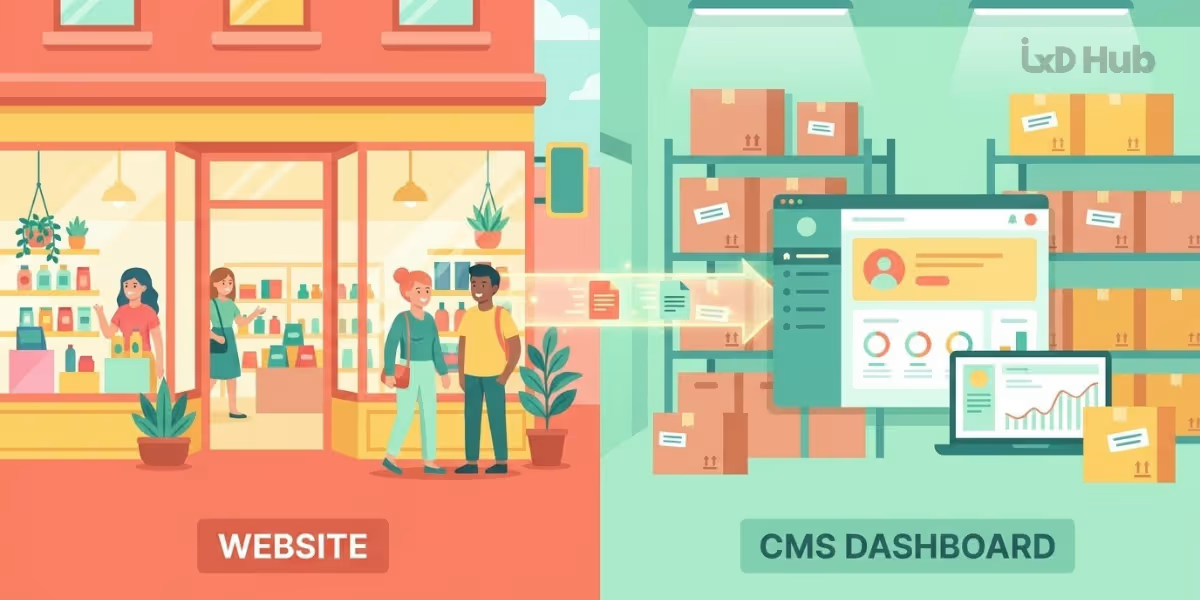
Your store has two main parts:
- The Front Display: This is the showroom where customers browse your products, read your offers, and click buttons. In web design, this is called the front end or the “head.”
- The Back Storage Room: This is the administrative control panel where your team writes blog posts, updates pricing, and saves customer details. This is your Content Management System (CMS), or the “body.”
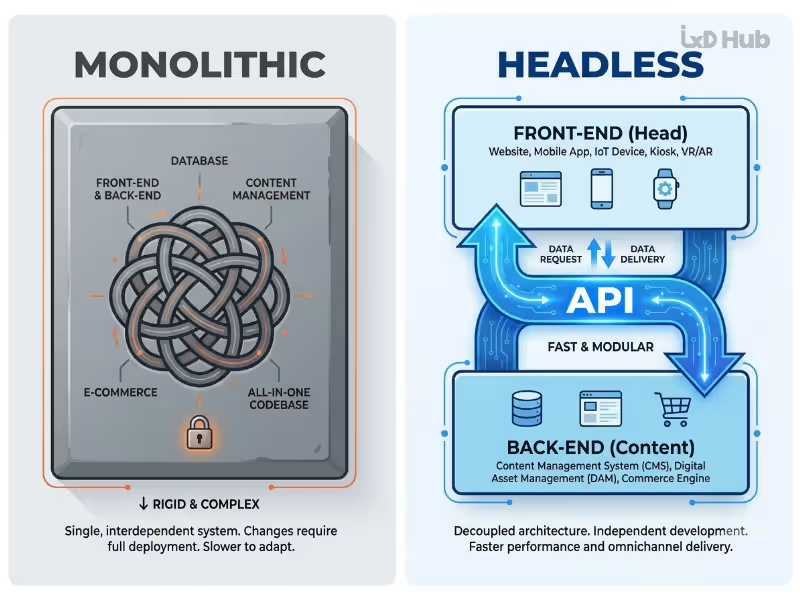
In a traditional setup, often called a monolithic website, the showroom and the storage room are glued together in one giant box. Platforms like standard WordPress, Drupal, or older eCommerce systems were all built this way.
When a visitor clicks on your page, your server has to do a massive amount of work. It has to dig through your databases, run heavy pieces of code, and assemble the entire visual page from scratch before it can finally show it to the user.
The Breaking Point for Growing Businesses
When you first launch a business, a simple all-in-one system works fine. But as your business grows, this monolithic system gets bloated.
You add a plugin for SEO, another for security, and another for popup forms. Suddenly, your backend storage room is completely chaotic. Updates become risky because changing one thing in the back can accidentally break the visual design in the front. Worst of all, your load times slow to a crawl. If you are currently weighing different setups for your business, you can check out our breakdown on Choosing the Right Website Development Platform: Types, Pros & Cons, and Best Use Cases.
What Is a Headless CMS in Plain English?
A headless CMS solves the speed and clutter problem by simply cutting the cord between your front showroom and your back storage room. It removes the “head” (the visual design your customers see) from the “body” (the dashboard where you type your content).
In a headless setup, your marketing team still logs into an easy, user-friendly control panel to write articles and edit text. But instead of that same system struggling to build the webpage visually, it simply sends your text over a clean data bridge (called an API) to a dedicated, high-speed front end.
By separating these two halves, your website loads almost instantly, stays incredibly secure against hackers, and never gets bogged down by back-end clutter.
The Power of Modern Frameworks
The front end of a headless website is usually built using modern web engines like React or Next.js. If you want to understand why top global platforms rely on this specific framework, read our deep dive on React JS: The Powerhouse Behind Modern Web Experiences.
When you compare a traditional monolithic vs. headless CMS side-by-side, the biggest difference is how these pieces communicate. A monolith forces everything to happen in one crowded space. A headless system divides the labor, letting your content system focus only on content, while your design system focuses only on delivering a lightning-fast experience to the user.
The Core Decoupled CMS Benefits That Drive Revenue
Upgrading your website technology is not about chasing shiny new trends just to look cool. It is about removing the friction that stops prospective clients from contacting you.
Upgrading your technology is a major business decision, so let’s look at the actual decoupled CMS benefits that will directly impact your revenue.
1. Blazing Fast Page Speeds That Keep Buyers on Your Site
When your website takes more than a couple of seconds to open, your ad spend is literally being wasted. Modern consumers have zero patience for loading bars. If they have to wait, they will simply click the “back” button and go to your competitor.
Because a headless setup pre-builds your pages before a visitor even arrives, clicks feel instantaneous. It feels more like tapping an app on your phone than loading a heavy webpage. To learn more about how speed directly impacts your conversion rates and bottom line, explore our guide on How to Improve Website Speed and Performance for Better UX.
2. Bulletproof Security for Peace of Mind
With traditional websites, hackers know exactly where to aim. Because the database and the public website are connected, hackers can use automated bots to target common login screens or outdated plugins on your public URL.
With a headless architecture, your database and editing dashboard are hidden on a completely private server. Your visitors and potential hackers only interact with static, lightweight display files on the front end. Because there is no direct connection to your database from the public website, you remove the biggest target from your back.
3. Freedom to Redesign Without Rebuilding Your Entire Database
Have you ever wanted to refresh your website’s look, only to have a developer tell you that you have to rebuild the entire system from scratch?
With a headless CMS, your content lives safely in its own independent hub. You can completely redesign your front-end customer experience, changing colors, layouts, and menus without ever risking your blog posts, product descriptions, or client testimonials. To understand how content structure connects to your page performance, read our comparison on Static vs Dynamic Websites: Which One Should You Choose?.
4. Omnichannel Delivery (Publish Once, Show Everywhere)
If you run a growing business, your website might not be the only place your content needs to live. You might have a mobile app, client portals, digital menu boards, or CRM landing pages.
A headless CMS acts as a single source of truth for your brand. You write your message, update a price, or publish a blog post once in your dashboard. The system then automatically pushes that update across your main site, your mobile app, and your client tools simultaneously. You never have to copy and paste the same update in three different places again.
Do You Need an Enterprise Architecture for a Startup?
You might hear IT agencies throw around complex terms like enterprise headless CMS architecture, but you do not need to be a Fortune 500 company to use this technology.
Even if a developer suggests a custom React Next.js CMS setup for your startup, the goal is simply to make your website load instantly and scale safely as your traffic grows.
- React is the engine that makes web pages feel incredibly snappy. Instead of the entire page flashing white and reloading when you click a button, only that tiny piece of the screen updates smoothly.
- Next.js is the production system built on top of React. It handles the heavy lifting of pre-building your pages, shrinking your images automatically, and serving your content from servers physically closest to where your customer is sitting.
This combination gives you an enterprise-grade digital presence that handles huge spikes in traffic like a big product launch or a viral social media post without crashing or slowing down.
As search algorithms and AI engines change how customers find businesses online, having a lightning-fast, structured website architecture is no longer an optional luxury. It is a requirement for showing up in search results. See how search engines are evolving in our breakdown of SEO, GEO, AIO, AEO & SXO: The New Layers of Web Search You Need to Know in 2026.
The Financial Reality: Costs, ROI, and Why Smart Brands Switch
One of the most common questions small business owners ask is: “If headless is so great, why isn’t everyone already using it?”
The answer comes down to the initial investment. Building a headless website requires specialized developers who know how to build secure APIs and work with modern frameworks like React. It costs more upfront than buying a $50 template and slapping it onto a basic WordPress host.
However, looking only at the upfront cost ignores the massive Return on Investment (ROI) and the long-term savings:
- Recovered Revenue: Amazon famously found that every 100 milliseconds of latency cost them 1% in sales. If your monolithic site takes 4 seconds to load, you are bleeding leads. A headless site stops that leak, resulting in booming sales and a higher conversion rate.
- The “Plugin Tax”: Monolithic sites require constant maintenance. Every time a plugin updates, something might break, forcing you to pay a developer an hourly rate to fix it. Headless sites don’t rely on messy plugin ecosystems, drastically reducing your monthly emergency maintenance bills.
- Cheaper Hosting at Scale: Because headless front-ends are essentially static files, they can be hosted on incredibly cheap, lightning-fast content delivery networks (CDNs). You aren’t paying for massive server processing power just to load a blog post.
How Do You Know It Is Time to Switch? (The Warning Signs)
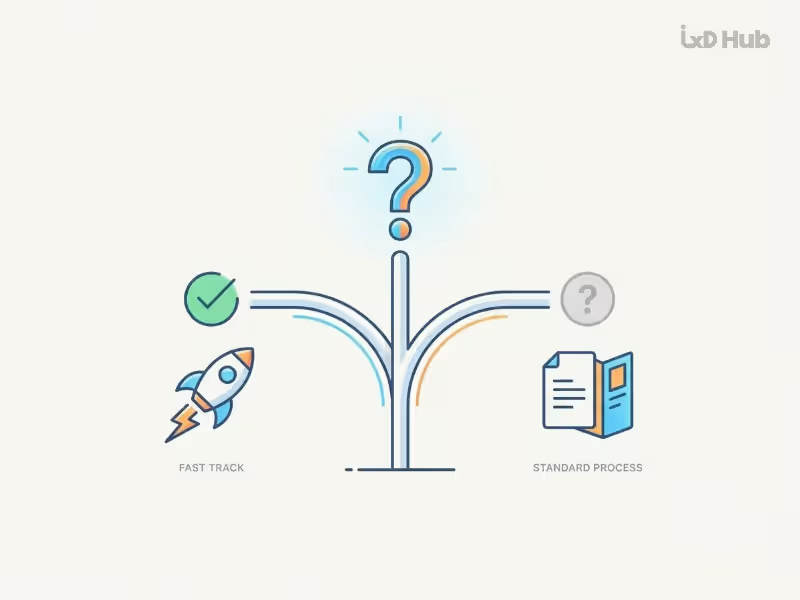
A headless website offers immense power, but it is not strictly necessary for every single business on the internet.
You should strongly consider upgrading to Headless if:
- Your current site is painfully slow, even after you paid someone to “optimize” it.
- You need custom interactive tools, client portals, or an app-like experience for your users.
- Security and uptime are critical to your sales pipeline (you cannot afford to be hacked or go offline during a launch).
- You want a future-proof setup that handles high traffic without breaking a sweat.
You can safely stick with a simple Monolithic site if:
- You run a basic 3-page brochure site that you only update once a year.
- You have zero budget for custom development and rely entirely on cheap templates.
- Page speed and online lead generation are not the primary ways you get new customers.
If your website is the engine that drives your revenue, staying stuck on an outdated setup costs you money every single day. As the industry moves forward, modern architectures are quickly becoming standard practice. Discover what else is coming in our forecast on What Lies Ahead? The Future of Web Development Trends.
What Does a Migration Actually Look Like?
Many business owners are terrified of changing their website architecture because they assume their site will have to go offline for weeks. With a headless migration, that is completely false.
Because the front end and back end are separate, migrating is actually a very safe, methodical process:
- The Assessment: A development team audits your current content and decides which headless CMS (like Sanity, Strapi, or Contentful) fits your team’s editing style best.
- The Build: Developers build your blazing-fast new React/Next.js front end on a private staging link. Your current, slow website stays completely live and operational during this entire phase.
- The Connection: Your existing content is exported and mapped into the new headless CMS.
- The Switch: Once everything is tested and approved, the domain is simply pointed to the new, lightning-fast front end. The switch happens in minutes, with zero downtime for your customers.
Ready to Move Beyond Buzz and Build a High-Performing Website?
At IxD Hub, we do not build websites just to look pretty. We engineer high-speed digital engines designed to capture attention, generate surging leads, and produce real growth.
Whether you need a complete web development overhaul, a lightning-fast headless rebuild, or a custom UI/UX strategy, our team is ready to help you scale. Explore our full range of solutions on our Full Service Digital Agency page.
Stop letting a slow website hold your business back.
Chat directly with our web development strategists on WhatsApp to get real answers about your site in minutes. Prefer email? Fill out our quick Contact Form, and our team will get back to you with an actionable plan.